A Fifty-Year License, Signed a Year Ahead of Schedule, Reshapes Who Makes Gucci’s Fragrance and Makeup.
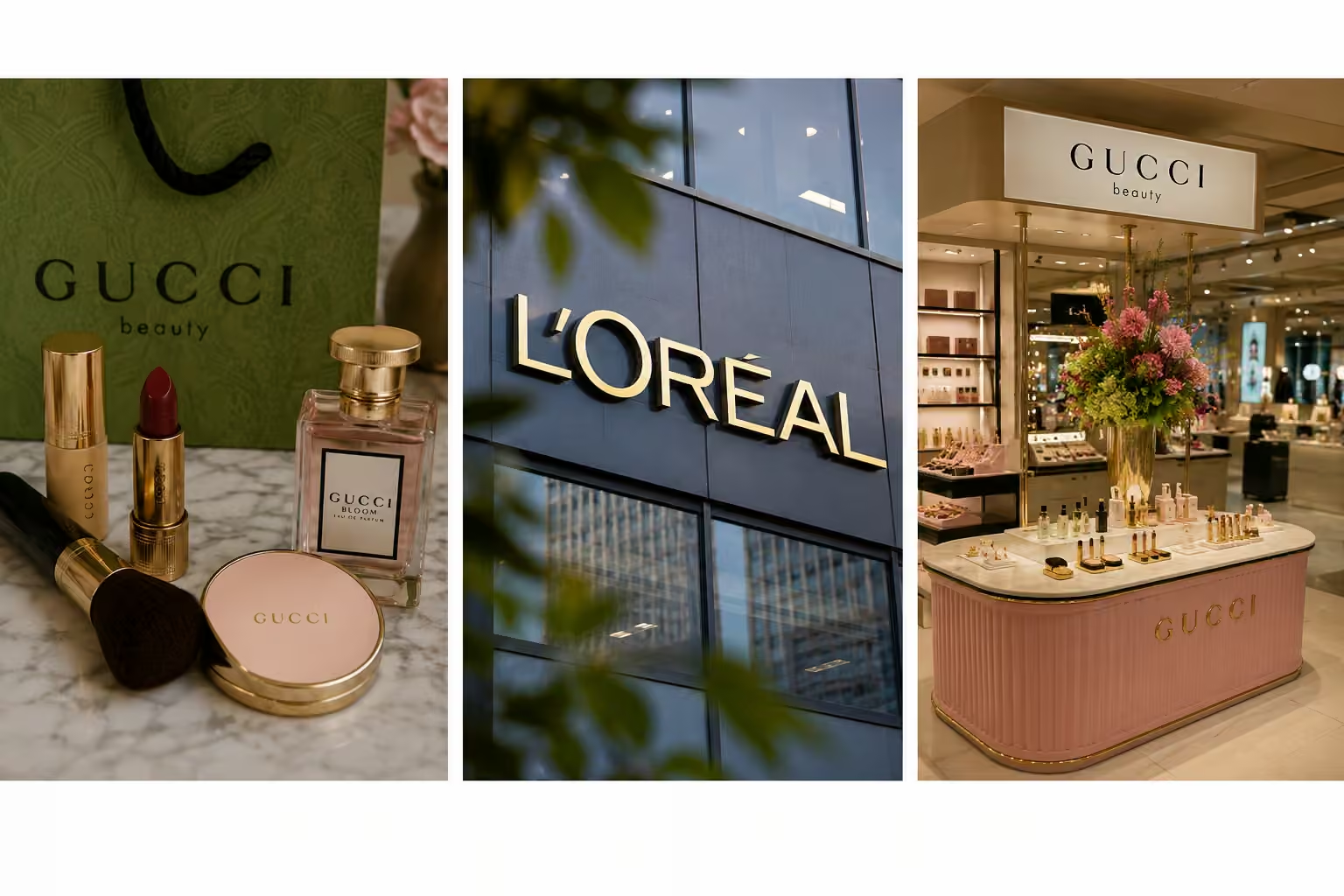
Gucci Beauty will move to L’Oréal in 2027, after Kering and L’Oréal confirmed a fifty-year exclusive worldwide license on July 7, 2026. The deal covers the creation, development and distribution of Gucci fragrance and beauty products and takes effect on July 1, 2027, subject to regulatory approvals. The $400 million figure is not a purchase price: it is compensation to Coty for giving up its license early.
Gucci Beauty L’Oréal Deal: Key Dates
| Date | Milestone |
|---|---|
| October 19, 2025 | Kering and L’Oréal announce a beauty and well-being alliance, including plans for a fifty-year Gucci Beauty license |
| March 31, 2026 | L’Oréal completes its acquisition of Kering Beauté, including Creed, and starts fifty-year Balenciaga and Bottega Veneta licenses |
| July 7, 2026 | Fifty-year Gucci Beauty license signed; Coty’s exit brought forward |
| June 30, 2027 | Coty operates Gucci Beauty until at least this date |
| July 1, 2027 | L’Oréal license takes effect |
| June 30, 2028 | Original end of Coty’s license, now superseded |
The real novelty is timing. The handover has been pulled forward by about a year, which matters because a year can cover a full development cycle in luxury beauty: fragrance creation, stability testing, bottle production, regulatory approval, campaigns and global launch.
Who Is Really Paying the $400 Million?
According to Kering, Coty will receive roughly $400 million for ending its license early. L’Oréal will reimburse Kering for about 70 percent of the early-termination costs and affected inventory, and a selection of Gucci Beauty stock will be acquired on top of the headline amount.
| Item | Detail |
|---|---|
| Recipient | Coty |
| Headline compensation | About $400 million |
| 2026 payment | $250 million |
| 2027 payment | $150 million |
| L’Oréal’s share | About 70% of termination costs and inventory |
| Inventory | A selection acquired in addition |
Read this way, the figure is the price of a shortened contract. Coty is giving up an operation built on years of investment, including teams, product lines, retailer relationships and international campaigns, and the payment recognizes the value of that final year. Coty has said it plans to use the proceeds to reduce debt, back its priority fragrance brands and streamline its organization. Both Coty and L’Oréal published their own announcements on July 7.
What a Beauty License Means for a Fashion House
A beauty license lets a fashion house hand fragrance and cosmetics to a specialist while keeping its identity, visual codes and heritage. The partner supplies research, formulation, safety testing, manufacturing, logistics, distributor negotiations, advertising and e-commerce, so the house avoids building laboratories and factories of its own. In simple terms, the house brings desirability and the partner brings execution.
The balance of power is shifting, though. Fashion houses now want tighter coherence between runway, accessories, fragrance, makeup, digital image and the in-store experience, which turns a licence into something closer to shared governance of the brand.
Why Gucci Chose L’Oréal Luxe
L’Oréal brings global strength in perfumery, skincare, makeup, research, production and selective distribution, and it presents the license as a new engine of growth. For Gucci, the appeal goes beyond scale, since L’Oréal has experience turning fashion brands into beauty powers.
The risk is sameness. Colors, names, bottles, campaigns and textures must stay true to Gucci’s universe, so L’Oréal’s challenge is to industrialize creativity without making it generic.
Kering’s Wider Beauty Strategy
The Gucci deal completes a larger plan. The October 2025 alliance also covered Creed, the Balenciaga and Bottega Veneta licenses, and an exploration of wellness and longevity opportunities. Gucci was the last major piece because it stayed tied to Coty until 2028.
The structure lets Kering keep control of its brands and creative vision while a specialist runs fragrance and cosmetics, freeing the group to focus on fashion, leather goods and accessories. That focus comes as the group manages creative change elsewhere, as when Seán McGirr left Alexander McQueen after three years as creative director.
Winners and Trade-Offs
| Party | What It Gains | What to Watch |
|---|---|---|
| Gucci | An earlier start to a new growth cycle | Keeping its creative identity distinct |
| L’Oréal Luxe | One of fashion’s best-known brands, a year early | Scaling without standardizing |
| Coty | Cash for debt reduction and priority brands | Redeploying capital effectively |
What Could Change for Shoppers in 2027
No new fragrances, bottles, makeup lines or launch dates have been announced. Perfume will likely stay central, as it does in most fashion licenses, because it is an entry point to the brand, drives gifting and builds franchises that last. Makeup is another natural territory, given Gucci’s bold visual language, though a catalog that grows too fast could blur its flagship products. Skincare has not been announced, so any talk of it should stay cautious.
Early changes will probably be gradual: new campaigns, merchandising, digital content and services. Major product overhauls take months or years, so 2027 looks like a transition year before a steadier ramp-up.
Transition Risks Between Coty and L’Oréal
| Area | Why It Matters |
|---|---|
| Product continuity | Stockouts can cost market share and shelf visibility |
| Inventory | Existing stock must be assessed, transferred or sold |
| Data and knowledge | Sales, feedback and launch history are strategic memory |
| Production | Glass, pump and component suppliers must be integrated |
| Regulation | Records, safety data and labelling must stay compliant |
| Teams | Some skills transfer; others must be rebuilt |
A successful handover is often invisible to the consumer.
Can Gucci Beauty Reach Multi-Billion Scale?
Cyril Chapuy, president of L’Oréal Luxe, has set the ambition of building Gucci Beauty into a multi-billion euro brand. That is a stated goal, not a guarantee. Getting there would mean protecting the best-performing perfumes, creating new international franchises, strengthening makeup and improving distribution, all without discounting heavily or sacrificing premium positioning.
The fifty-year term helps by allowing long-term investment in teams, tools and production, though it must stay flexible enough to adapt over decades. For more, browse our Fashion & Beauty coverage and all Latest Stories.
FAQs: Gucci Beauty and L’Oréal
When Does Gucci Beauty Move to L’Oréal?
The fifty-year license takes effect on July 1, 2027, subject to regulatory approvals.
Did L’Oréal Pay $400 Million for Gucci Beauty?
No. The roughly $400 million is compensation to Coty for ending its license early, with L’Oréal covering about 70 percent of the related costs and inventory.
Who Runs Gucci Beauty Until Then?
Coty continues to operate Gucci Beauty until at least June 30, 2027.
Have New Gucci Products Been Announced?
No. No new fragrances, makeup or skincare lines or launch dates have been announced.