Kering reported third-quarter revenue of €3.35 billion, remaining flat at reported exchange rates but declining 1% on a comparable basis, as weaker luxury demand and continued challenges at Gucci weighed on the French luxury group’s performance.
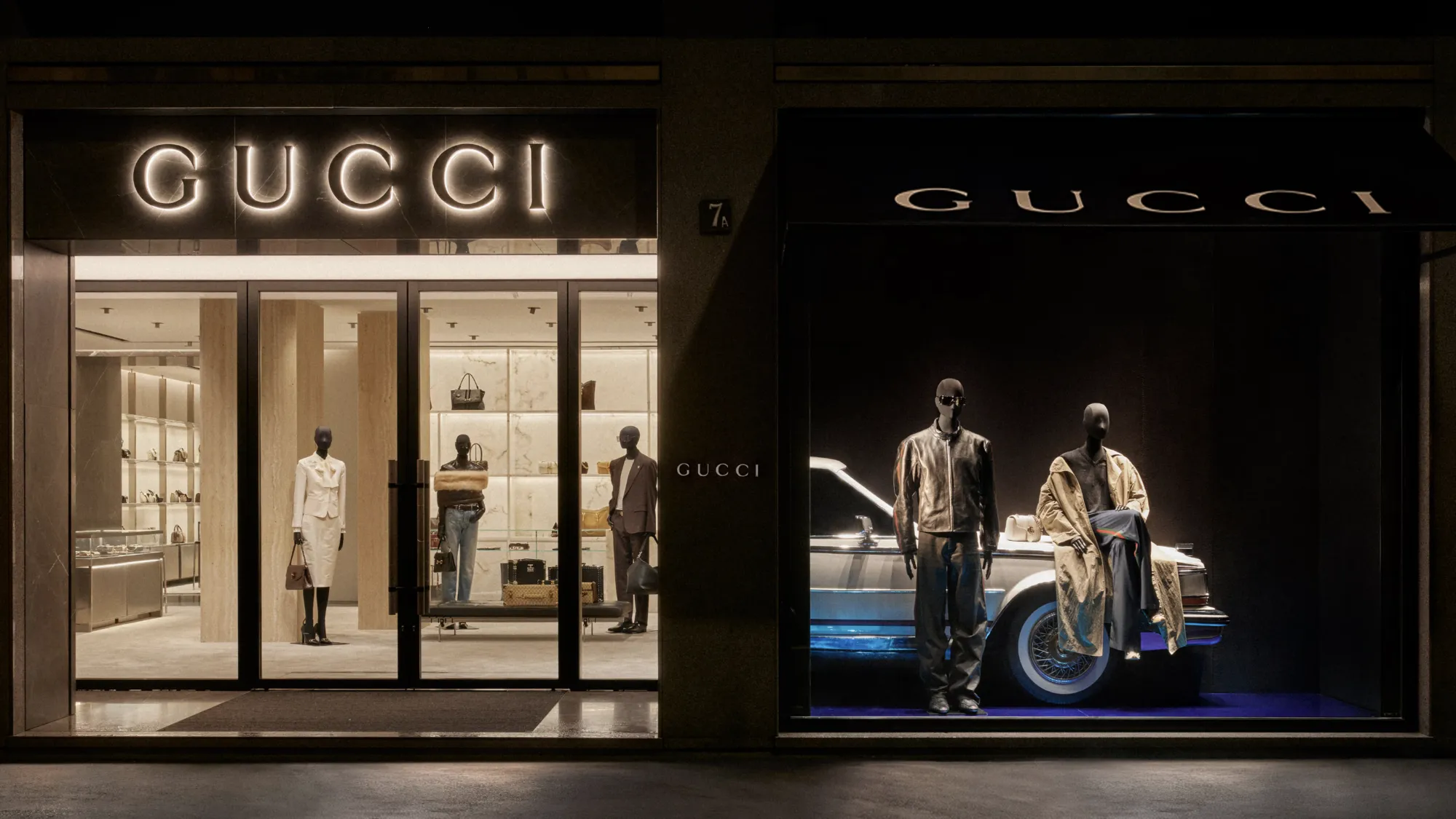
The results, covering the three months ended September 30, were slightly better than analysts’ expectations for a 1.3% decline in organic sales. However, Kering continued to face pressure from Gucci, its flagship brand and primary profit contributor, which recorded a 6% sales decline at constant exchange rates. The result was worse than the 5.4% drop anticipated by analysts.
The figures highlight the challenges facing the luxury group as it attempts to restore brand desirability, strengthen profitability and revive growth amid a more uncertain global economic environment.
Gucci Sales Decline 6% as Turnaround Faces Fresh Challenges
Gucci’s latest performance marked a deterioration from the second quarter, when sales fell by a comparatively smaller 2%. The brand had shown early signs of stabilisation during that period, contributing to the group’s first comparable sales increase in three years.
However, Kering chief executive Luca de Meo had cautioned that the recovery would not follow a straight path. He previously warned that third-quarter results could remain subdued because of less favourable comparisons with 2025.
In its latest statement, Kering attributed the quarterly performance to anticipated timing effects and a softer macroeconomic environment.
De Meo said Gucci’s recovery remained the group’s defining priority, adding that the company was working to strengthen brand desirability and accelerate product development. He also described the group’s broader transformation as a multiseason undertaking.
The comments underline the scale of the challenge facing Kering as it seeks to translate creative changes and product launches into sustained sales growth.
Demna’s Gucci Strategy Remains Central to the Recovery
Creative director Demna is approaching his first full year at Gucci as the brand attempts to establish a stronger creative identity and reconnect with luxury consumers.
His strategy has included a bold move towards daring, sensual designs that recall Gucci’s commercially successful Tom Ford era. The approach aims to reignite consumer interest and restore the brand’s position in the highly competitive luxury fashion market.
According to Kering, Gucci experienced a less pronounced impact from new product launches during the third quarter than in the preceding quarter, when Demna’s first designs became more widely available in stores.
The company said store traffic remained its main constraint, although conversion rates, average prices and average transaction values improved further. These developments suggest that customers who entered stores were showing stronger purchasing behaviour, even as attracting more shoppers remained difficult.
The performance of Demna’s collections will be crucial to Kering as it works to rebuild Gucci’s desirability and establish a more consistent recovery.
Kering Maintains 2026 Operating Margin Guidance
Despite the pressure on Gucci, Kering maintained its full-year guidance, reaffirming its objective of improving recurring operating margin in 2026.
The group said its profitability target would be supported by ongoing efficiency measures while continuing to invest in the desirability of its luxury brands.
The outlook reflects a dual challenge: controlling costs and improving operational performance without undermining the investment needed to strengthen creative direction, product development and customer demand.
For Kering, restoring profitability is particularly important given Gucci’s significant contribution to the group’s earnings. A sustained improvement in the brand’s performance could help support the wider recovery, while continued weakness may complicate efforts to improve margins.
The group has also been restructuring the management of its fashion businesses as part of its broader turnaround strategy.
Kering’s Fashion and Leather Goods Division Records a 3% Decline
Although Kering no longer provides separate performance figures for all its other fashion houses, its fashion and leather goods division recorded a 3% decline in comparable sales during the third quarter.
The division’s performance reflects the broader pressures affecting luxury fashion, including cautious consumer spending and uneven demand across key markets.
By comparison, LVMH reported a 5% year-on-year decline in organic revenue for its fashion and leather goods division, with weaker demand in China contributing to the downturn.
The comparison suggests that the luxury sector continues to face a challenging operating environment, although individual brands and product categories are experiencing different levels of pressure.
For Kering, Gucci’s performance remains the most significant factor to watch as the group works to stabilise its fashion portfolio and improve overall results.
Jewelry and Eyewear Deliver Growth
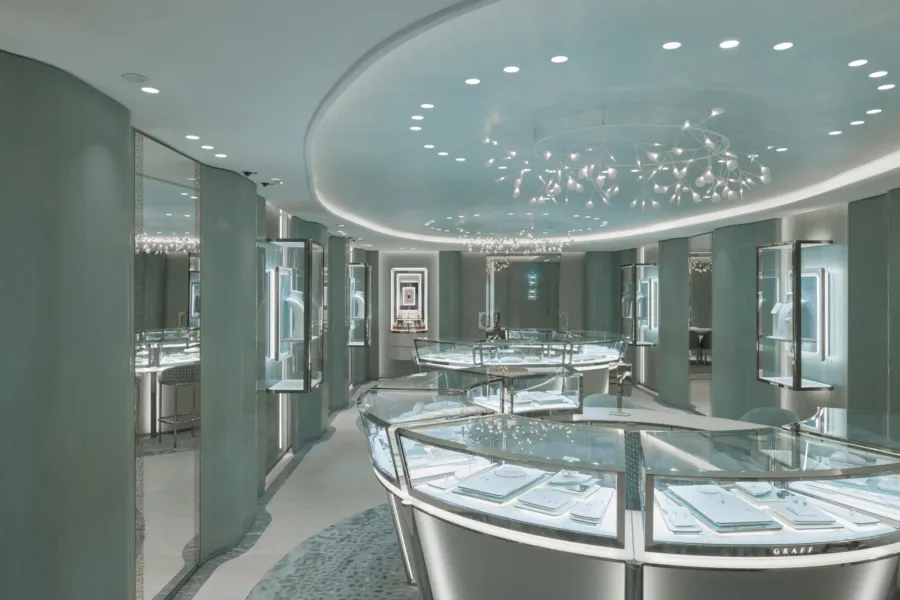
Not all parts of the group’s business experienced declines. Kering’s jewelry division recorded an 11% increase in comparable revenue, while its eyewear business grew by 4%.
The corporate and other division, meanwhile, reported a 5% decline.
The stronger performance in jewelry and eyewear offers some diversification as the group navigates ongoing challenges in fashion and leather goods. However, the scale of Gucci’s importance means that growth in these smaller areas is unlikely to replace the impact of a sustained recovery at the flagship label.
The contrasting results highlight the importance of balancing brand-specific turnaround efforts with broader portfolio management.
Creative Leadership Changes Add Pressure to Kering
Kering’s transformation is also unfolding amid significant changes in the fashion industry’s creative leadership.
The group has seen departures involving Anthony Vaccarello at Saint Laurent and Seán McGirr at Alexander McQueen, with replacements yet to be announced, according to the supplied report. Industry speculation has also focused on Balenciaga creative director Pierpaolo Piccioli.
These developments add another layer of uncertainty as luxury brands compete to maintain creative relevance and attract consumers through distinctive collections.
For Kering, leadership decisions will be important in shaping the future direction of its fashion houses. The group must balance creative experimentation with the commercial demands of restoring growth and improving profitability.
The pressure is especially acute at Gucci, where Demna’s creative vision is being tested against the need for measurable business improvement.
Outlook: Gucci’s Recovery Will Define Kering’s Next Chapter
Kering’s third-quarter results present a mixed picture. Group revenue performed slightly better than analysts had expected, while jewelry and eyewear delivered growth. However, Gucci’s 6% sales decline demonstrates that the flagship brand’s recovery remains vulnerable to weaker demand and uneven product momentum.
The group’s decision to maintain its 2026 operating margin objective signals continued confidence in its cost-efficiency programme and long-term transformation strategy.
The coming quarters will be important in determining whether Demna’s collections can generate stronger customer interest, whether improved conversion rates can translate into higher sales and whether the group can sustain its progress in profitability.
Ultimately, Kering faces a defining test: turning early signs of operational improvement into a durable recovery at Gucci while strengthening the performance of its wider luxury portfolio.
As the luxury market navigates economic uncertainty and shifting consumer preferences, the group’s ability to rebuild Gucci’s desirability is likely to remain central to its financial outlook and competitive position.
Frequently Asked Questions (FAQs)
1. What were Kering’s third-quarter revenues in 2026?
Kering reported third-quarter revenue of €3.35 billion for the three months ended September 30, 2026. Revenue remained flat at reported exchange rates but declined 1% on a comparable basis.
2. Why did Gucci sales decline in the third quarter?
Gucci sales fell 6% at constant exchange rates, compared with the 5.4% decline expected by analysts. The performance reflected weaker product-launch momentum compared with the previous quarter, while store traffic remained a key challenge amid a softer luxury market.
3. Who is the creative director of Gucci?
Demna is Gucci’s creative director. His strategy includes introducing bold, daring designs intended to rebuild the brand’s desirability and reconnect with luxury consumers.
4. What is Kering’s financial outlook for 2026?
Kering maintained its full-year guidance and reaffirmed its objective of improving recurring operating margin in 2026. The group plans to support profitability through efficiency measures while continuing to invest in its luxury brands.
5. How did Kering’s jewelry and eyewear businesses perform?
Kering’s jewelry division recorded an 11% increase in comparable revenue in the third quarter, while eyewear revenue rose 4%. These gains provided some positive momentum despite weaker performance in fashion and leather goods.
6. How did Kering perform compared with LVMH?
Kering’s fashion and leather goods division reported a 3% comparable sales decline, while LVMH’s equivalent division recorded a 5% year-on-year decline in organic revenue. Both groups faced challenging luxury-market conditions.
7. Why is Gucci’s recovery important for Kering?
Gucci is Kering’s flagship brand and a major contributor to its earnings. A sustained recovery in Gucci sales could help improve the group’s overall revenue, profitability and competitive position in the global luxury market.
8. What are the main challenges facing Kering?
Kering faces weaker luxury demand, reduced store traffic at Gucci, pressure to improve operating margins and uncertainty surrounding creative leadership across parts of its fashion portfolio. Its ability to strengthen brand desirability and turn new collections into sustained sales growth will be central to its recovery.