The most fascinating details in luxury perfumery are not always found in the fragrance itself. Sometimes, they are hidden in the bottle, preserved in a centuries-old formula or revealed through the extraordinary journey of a single ingredient. At Guerlain, even the smallest details carry stories that connect French royalty, artistic craftsmanship and some of the most influential creations in fragrance history.
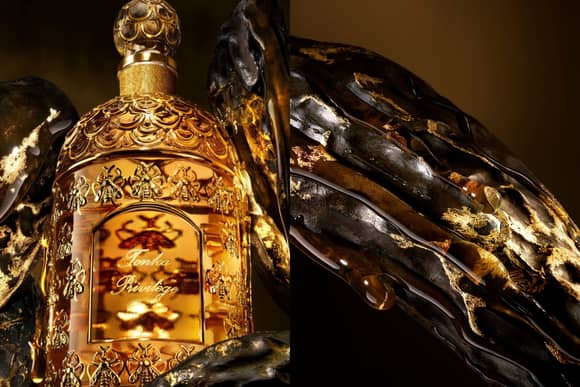
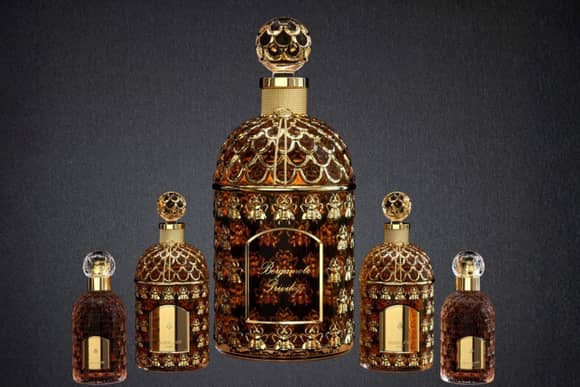
Consider the house’s iconic Bee Bottle. At first glance, it appears to be an elaborate piece of decorative glass, but its design carries a connection to the French imperial court and a fragrance created for an empress. Its surface is decorated with 69 golden bees, transforming a perfume bottle into a symbol of heritage that has survived for more than 170 years.
That is only one part of Guerlain’s remarkable story. From the revolutionary introduction of Jicky in 1889 to the enduring reputation of Shalimar, the French fragrance house has repeatedly helped shape the language of modern perfumery. Now, in 2026, Guerlain is bringing that history into a new chapter with Les Privilèges, an exceptionally limited collection created by Master Perfumer Thierry Wasser.
With six fragrances inspired by the house’s signature ingredients and only eight collector editions available for each creation, the collection places rare raw materials, traditional craftsmanship and exclusivity at the centre of the luxury fragrance conversation.
Here are the stories behind Guerlain’s most fascinating perfume traditions and the new collection continuing its legacy.
1. The Bee Bottle Was Created for a French Empress
Guerlain’s relationship with French royalty dates back to 1853, when founder Pierre-François-Pascal Guerlain created Eau de Cologne Impériale for Empress Eugénie, the wife of Napoleon III.
The fragrance was specially composed for the empress and presented to her on the occasion of her marriage to Napoleon III. Its creation earned Guerlain the distinction of becoming the official perfumer to Her Majesty.
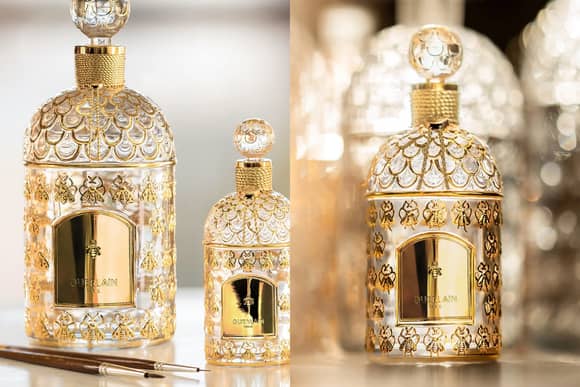
The bottle was designed to be as memorable as the fragrance it contained. Produced by the historic glassmaker Pochet du Courval, it featured a decorative arrangement of 69 bees, the emblem of the French Empire. Its design also incorporated a festoon motif inspired by the Vendôme column in Paris.
The result became known as the Bee Bottle, one of the most recognisable objects in Guerlain’s history.
There is an interesting distinction between the history of the house and the history of this particular fragrance. Guerlain was founded in 1828, while Eau de Cologne Impériale and the original Bee Bottle date to 1853. The distinction matters because the fragrance represents a defining moment in a much longer story of French perfumery.
The bottle has continued to evolve through different editions, but its central identity has remained remarkably consistent. Some prestige versions are embellished by hand with fine gold, preserving a tradition of decorative craftsmanship that connects contemporary collectors with the original imperial creation.
The Bee Bottle is therefore more than an attractive piece of packaging. It is a physical expression of Guerlain’s relationship with French history, artistry and luxury.
2. Jicky Helped Change the Direction of Modern Perfumery
In 1889, Aimé Guerlain introduced Jicky, a fragrance widely recognised as a landmark in the development of modern perfumery.
At the time, fragrance creation was largely associated with recognisable natural ingredients and traditional compositions. Jicky introduced a more experimental approach, combining natural materials with synthetic molecules to create a scent that felt different from the established conventions of the period.
Among its important components were coumarin and vanillin, molecules that opened new possibilities for fragrance composition.
The significance of Jicky lies in how it brought together different olfactory materials to create a more abstract and complex fragrance. Instead of simply reproducing the smell of flowers or familiar natural elements, the composition demonstrated how perfumers could build entirely new scent experiences through the relationship between natural and synthetic ingredients.
Guerlain describes Jicky as the first fragrance to combine synthetic and natural notes. Its influence helped open the door to the modern approach to fragrance creation, in which chemistry and artistic imagination work together.
There is another fascinating aspect to Jicky’s history. Its distinctive character did not fit neatly into the traditional expectations of fragrances marketed separately to women and men. Its unusual composition attracted different audiences, and the fragrance has since become associated with a more fluid understanding of perfume.
More than a century after its introduction, Jicky remains an important part of Guerlain’s fragrance heritage and a reminder that innovation can become timeless.
3. Shalimar Was Inspired by One of History’s Most Famous Love Stories
Few fragrances have a story as romantic as Shalimar.
Created by Jacques Guerlain in 1925, the fragrance was inspired by the love story of Mughal emperor Shah Jahan and his wife Mumtaz Mahal. Their relationship is famously associated with the Taj Mahal in India, the monument Shah Jahan commissioned in her memory.
The gardens of Shalimar, created in honour of Mumtaz Mahal, provided the inspiration for the fragrance’s name and emotional identity.
Rather than simply translating a historical love story into a perfume, Jacques Guerlain interpreted its atmosphere through an entirely new olfactory composition.
Shalimar became particularly influential for its use of vanilla, bergamot and warm, sensual notes. Guerlain identifies it as the first amber fragrance in perfumery history, helping establish an enduring fragrance family that continues to influence the industry.
Its presentation was also significant. The bottle, designed by Raymond Guerlain, featured a distinctive footed form inspired by the basin of a Mughal garden. Its blue stopper was another important design detail, described by the house as the first coloured stopper in perfumery.
Shalimar demonstrates how a fragrance can carry several identities at once: an artistic composition, a piece of design history and an interpretation of a cultural love story.
It also reveals something fundamental about Guerlain’s creative philosophy. The house has repeatedly drawn inspiration from history, nature, architecture and human emotion, turning those influences into fragrances that can outlive the moment of their creation.
4. Guerlain’s Signature Scent Is Built Around Six Ingredients
If different Guerlain fragrances sometimes seem to share an underlying character, there is a reason.
The house has a distinctive olfactory signature known as Guerlinade. It is built around six emblematic ingredients: rose, jasmine, iris, bergamot, vanilla and tonka bean.
These ingredients form an important part of the house’s creative vocabulary. They are not intended to make every Guerlain perfume smell identical. Instead, they provide a shared foundation that can be interpreted in different ways by successive generations of perfumers.
Each ingredient contributes a different dimension to fragrance composition.
- Rose brings floral richness and a recognisable elegance.
- Jasmine offers a luminous floral character with considerable depth.
- Iris is valued for its refined, powdery qualities.
- Bergamot introduces a fresh, sparkling citrus character.
- Vanilla adds warmth, softness and sweetness.
- Tonka bean contributes a warm, aromatic quality, including the naturally occurring molecule coumarin.
The combination is important because these materials can be interpreted in very different proportions and styles. A fragrance may emphasise the freshness of bergamot, the richness of rose or the warmth of vanilla while retaining a connection to the wider Guerlain identity.
Guerlain describes the Guerlinade as an invisible thread running through the house’s fragrance heritage. It is this creative continuity that makes the 2026 Les Privilèges collection particularly interesting.
Rather than introducing an entirely unrelated direction, the new collection returns to the six ingredients that have helped define the house’s olfactory identity.
5. The Story of Iris Perfume Begins Underground, Not in the Flower
One of the most surprising details in fine perfumery concerns iris.
When people think of floral fragrances, they naturally imagine petals, blossoms and the scent of a flower in bloom. But the precious iris material used in high-end perfumery comes from the plant’s underground rhizomes rather than its petals.
The rhizomes are processed to produce iris butter, a valuable perfumery ingredient known for its refined, powdery character.
This material requires considerable patience and expertise. Its production involves cultivation, harvesting, processing and maturation, making it a particularly demanding ingredient to work with.
Guerlain’s relationship with iris goes back to at least 1906, when Jacques Guerlain created Après L’Ondée. The fragrance used iris as part of a delicate composition that also explored violet and vanilla nuances.
The fragrance remains an important example of the house’s ability to translate natural inspiration into something more abstract and atmospheric.
Iris is also one of the six ingredients at the heart of Guerlinade. Its presence in the 2026 Les Privilèges collection is therefore more than a tribute to a beautiful flower. It recognises the technical skill and time involved in transforming a difficult natural material into an expressive fragrance ingredient.
6. Guerlain’s Vanilla Tradition Goes Beyond Sweet Fragrance Notes
Vanilla is one of the most familiar ingredients in perfumery, but its use in fine fragrance can be far more complex than its association with sweetness suggests.
At Guerlain, vanilla is part of the house’s longstanding olfactory identity. It has played an important role in creations such as Shalimar and continues to inspire contemporary compositions.
One traditional technique associated with the house is vanilla tincture, made by steeping vanilla pods in alcohol. This process allows the material to release its aromatic qualities into the liquid, creating an ingredient that can be used in fragrance formulation.
The technique reflects a broader philosophy of perfumery: raw materials are not simply selected and added to a formula. Their character depends on origin, quality, preparation and the way they are interpreted by the perfumer.
In the world of high perfumery, the difference between a familiar ingredient and an exceptional fragrance often lies in these details.
The 2026 Les Privilèges collection gives vanilla a dedicated interpretation, placing it alongside the other five ingredients that define Guerlain’s signature.
7. Thierry Wasser Reimagines Guerlain’s Heritage With Les Privilèges 2026
The latest expression of this history arrives through Les Privilèges, a 2026 collection of six exceptional fragrances created by Guerlain’s Master Perfumer Thierry Wasser.
Rather than treating the six ingredients as supporting elements within a larger composition, Wasser gives each one its own fragrance.
The result is a collection built around six distinct olfactory interpretations of the Guerlinade:
- Bergamote N°1
- Rose N°1
- Iris N°1
- Jasmin N°1
- Tonka N°1
- Vanille N°1
Each creation focuses on one of the house’s emblematic ingredients, with Guerlain selecting materials from specific growing regions and refining them through carefully controlled extraction and formulation processes.
The concept is particularly interesting because it allows collectors to explore the individual character of each ingredient while recognising the shared heritage connecting all six fragrances.
Guerlain describes the collection as a series of exceptional vintage-inspired interpretations. The creations are intended for collectors and fragrance connoisseurs who appreciate the quality of rare ingredients and the precision involved in high perfumery.
The collection also reflects Wasser’s approach to creativity: respecting an established fragrance language while allowing it to develop through new interpretations.
8. Six Fragrances, Only Eight Collector Editions Each
The most extraordinary aspect of Les Privilèges is its limited production.
Each of the six fragrances is offered in just eight collector editions worldwide. This means that the collection is designed for an exceptionally small audience, with each creation occupying a position closer to a collectible fragrance object than a conventional retail perfume.
The presentation is equally elaborate.
Each collector set includes:
- One one-litre Bee Bottle.
- Two 125 ml fragrance bottles.
- Two 30 ml travel sprays.
The one-litre bottle brings the collection back to the original visual language of Guerlain. The historic Bee Bottle is not simply decorative packaging here; it becomes the centrepiece of an elaborate fragrance presentation.
The larger bottle is complemented by smaller formats, which provide a more practical way to experience the compositions. Guerlain states that the accompanying bottles can be refilled indefinitely.
The limited production is also significant. According to the house, once a particular creation sells out, it will not be reproduced. Future editions of Les Privilèges will instead introduce new creations, allowing the series to develop over time without repeating the same release.
For collectors, this creates an interesting relationship between fragrance and rarity. The appeal is not simply the number of bottles available, but the combination of historical ingredients, specialist craftsmanship, a distinctive presentation and a defined production limit.
9. What Does the 2026 Les Privilèges Collection Cost?
The collection occupies an exceptionally high position in the luxury fragrance market.
According to the reported Taiwanese launch pricing, each collector set is priced at NT$1,404,000. The six fragrances are each limited to eight sets, making the collection particularly exclusive.
The price should be understood in its market context: NT$1,404,000 is the reported Taiwan price, rather than a universal international retail price.
For buyers, the proposition extends beyond the scent itself. Each set combines a one-litre Bee Bottle, additional fragrance bottles, rare raw materials and a limited production run. The presentation is designed to appeal to collectors who view high perfumery as an extension of art, craftsmanship and personal collecting.
There is also a wider question about how luxury fragrance is evolving. While many brands compete through new launches, celebrity campaigns and seasonal releases, Les Privilèges takes a different route. It places the emphasis on scarcity, the identity of raw materials and the creative authority of the perfumer.
That approach makes the collection an interesting statement about the future of ultra-luxury fragrance.
A Heritage That Continues to Evolve
Guerlain’s story is remarkable because it has never depended on a single fragrance or a single moment in history.
The house began in Paris in 1828, established its relationship with the French imperial court in 1853, helped reshape modern perfumery with Jicky in 1889 and introduced Shalimar in 1925. Across generations, its perfumers have continued to reinterpret familiar materials and create new expressions of the house’s identity.
The Bee Bottle remains a reminder that luxury can be communicated through craftsmanship and symbolism as much as through the product itself. The Guerlinade demonstrates how a shared olfactory signature can connect fragrances created decades apart. And Les Privilèges shows how that heritage can be translated into an exceptionally limited contemporary collection.
Perhaps the most compelling aspect of Guerlain’s history is the way it turns familiar things into extraordinary stories. A bee becomes an imperial emblem. A flower’s underground rhizome becomes a prized fragrance ingredient. Vanilla becomes an exercise in traditional extraction. And six familiar materials become the foundation for six highly exclusive creations.
In the end, the appeal of Guerlain is not only about how a fragrance smells. It is about the history, imagination and craftsmanship contained within every composition.
With Les Privilèges 2026, the house is inviting a very small group of collectors to experience that heritage in a new form — one that connects the legacy of an imperial perfume bottle with the possibilities of contemporary high perfumery.
Frequently Asked Questions
Q1. How many bees are on the Guerlain Bee Bottle?
A: The iconic Guerlain Bee Bottle features 69 bees, representing the emblem of the French Empire.
Q2. Why was the Guerlain Bee Bottle created?
A: It was created in 1853 to hold Eau de Cologne Impériale, a bespoke fragrance presented to Empress Eugénie, wife of Napoleon III.
Q3. When was Guerlain founded?
A: Guerlain was founded in Paris in 1828 by Pierre-François-Pascal Guerlain.
Q4. What is Guerlain’s first famous modern fragrance?
A: Jicky, created by Aimé Guerlain in 1889, is recognised as a landmark in modern perfumery for combining natural and synthetic fragrance materials.
Q5. What inspired Guerlain Shalimar?
A: Created in 1925, Shalimar was inspired by the love story of Mughal emperor Shah Jahan and Mumtaz Mahal, whose story is closely associated with the Taj Mahal and the gardens of Shalimar.
Q6. What is Guerlinade?
A: Guerlinade is Guerlain’s signature olfactory identity, built around six ingredients: rose, jasmine, iris, bergamot, vanilla and tonka bean.
Q7. Who created Guerlain Les Privilèges 2026?
A: The collection was created by Thierry Wasser, Guerlain’s Master Perfumer.
Q8. How many fragrances are in the Les Privilèges 2026 collection?
A: The collection features six fragrances: Bergamote N°1, Rose N°1, Iris N°1, Jasmin N°1, Tonka N°1 and Vanille N°1.
Q9. How limited is Guerlain Les Privilèges 2026?
A: Each of the six fragrances is limited to eight collector editions worldwide.
Q10. What is the price of Guerlain Les Privilèges 2026?
A: The reported Taiwanese price is NT$1,404,000 per collector set. Prices may differ in other markets.
Q11. What does each Les Privilèges collector set include?
A: Each set includes one one-litre Bee Bottle, two 125 ml fragrance bottles and two 30 ml travel sprays.
Q12. Will Guerlain reproduce the Les Privilèges fragrances after they sell out?
A: Guerlain states that each creation will not be reproduced once sold out. New creations are expected to continue the Les Privilèges series.
Guerlain – Key Details
| Category | Details |
|---|---|
| Brand | Guerlain |
| Founded | 1828 |
| Founder | Pierre-François-Pascal Guerlain |
| Country of Origin | France |
| Royal Connection | Empress Eugénie and Napoleon III |
| Eau de Cologne Impériale | Created in 1853 |
| Bee Bottle | Decorated with 69 bees |
| Historic Fragrance Milestone | Jicky, introduced in 1889 |
| Iconic Fragrance | Shalimar, created in 1925 |
| Signature Scent Identity | Guerlinade |
| Guerlinade Ingredients | Rose, jasmine, iris, bergamot, vanilla and tonka bean |
| 2026 Collection | Les Privilèges |
| Master Perfumer | Thierry Wasser |
| Number of Fragrances | Six |
| Limited Quantity | Eight collector editions per fragrance |
| Reported Taiwan Price | NT$1,404,000 per set |
| Set Presentation | One 1-litre bottle, two 125 ml bottles and two 30 ml sprays |
| Collection Positioning | Ultra-limited high perfumery and collectible fragrance |
Explore more luxury stories: Discover our coverage of Tilda Swinton’s appointment as a Cartier ambassador, another example of how heritage luxury houses connect their histories with contemporary cultural figures.