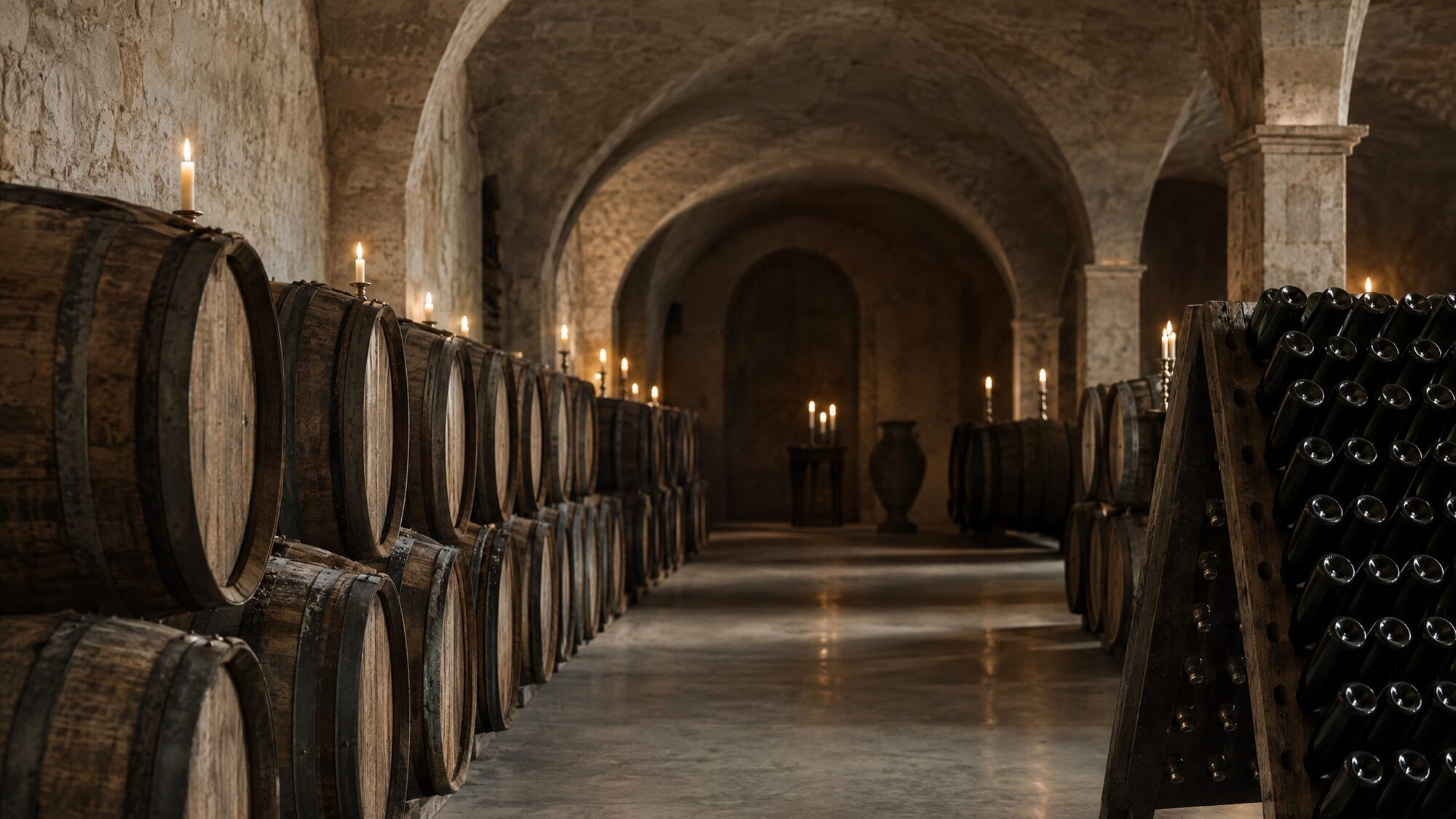
Somewhere beneath the chalk of northern France, millions of bottles lie quietly in the dark. Above them, the world hurries on. Below, very little happens for years at a time, and that is exactly the point.
Champagne’s famous sparkle is created in the bottle itself. After a still base wine is blended, a little sugar and yeast are added and the bottle is sealed. As the yeast works, it produces the carbon dioxide that becomes the bubbles, then settles as a fine sediment known as the lees.
The gift of time on the lees
It is this sediment that gives great Champagne much of its character. Over months and years, the lees slowly enrich the wine with notes of brioche, toasted almond and fresh pastry, along with a finer, creamier texture. The rules of the region require at least fifteen months of ageing for non-vintage Champagne and three years for vintage bottles, and the most celebrated houses often wait far longer.
In Champagne, patience is not a virtue. It is an ingredient.
Riddling and release
When the wine is finally ready, the sediment must be removed. Traditionally, bottles rest neck-down in wooden racks called pupitres and are turned by hand, a fraction at a time, until the lees gather in the neck. This process, known as riddling, was once the work of specialists who could turn tens of thousands of bottles in a single day. Machines now do much of the work, but some prestige cuvées are still riddled by hand.
The neck is then frozen, the plug of sediment expelled, and the bottle topped up and corked. Even then, the finest houses often rest the wine again before release, allowing it to settle after disgorgement.
So when you next raise a glass, consider the years of quiet that preceded it. Few luxuries are made so slowly, and fewer still are so worth the wait.