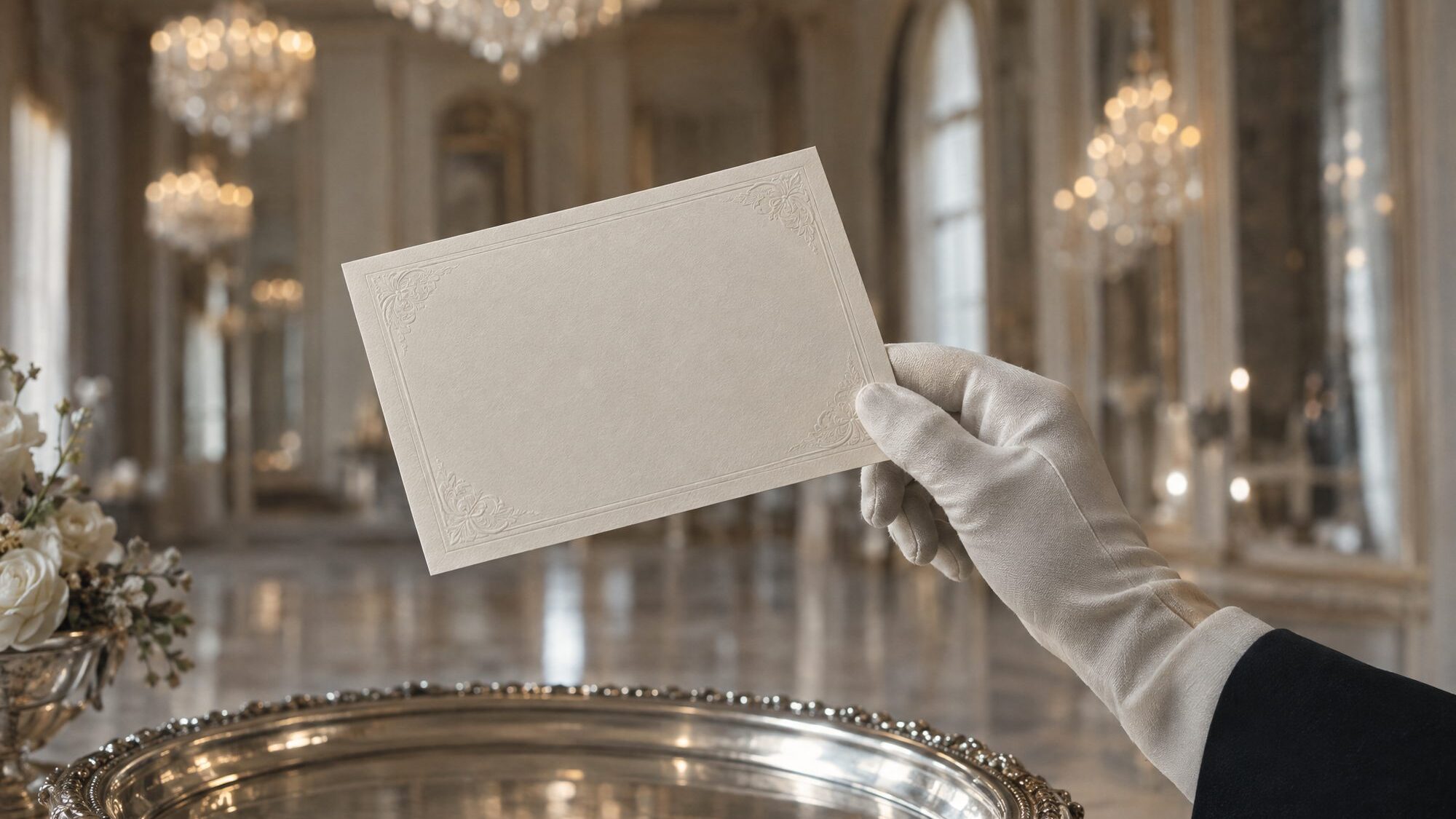
Every memorable evening begins long before the candles are lit. It begins with an invitation, and the best invitations tell you almost everything you need to know about the occasion to come.
In an age of group messages and digital calendars, a beautifully made card has become a rare and powerful signal. It says that the host has taken care, and that the guest is expected to do the same.
Paper, print and proportion
Traditional invitations favour heavy, uncoated card in ivory or white, with lettering that is engraved or letterpressed so that it can be felt as well as read. The wording is restrained, the layout centred and the margins generous. Restraint, as ever, is the mark of confidence.
An invitation is the first course of any great evening. It should leave the guest hungry for the rest.
Timing and tone
For formal events such as weddings and galas, invitations are customarily sent six to eight weeks in advance, with save-the-date cards earlier still for guests who must travel. Smaller dinners call for two to three weeks’ notice. Always state the dress code clearly; it spares guests uncertainty and sets the tone for the night.
The courtesy of a reply
A reply should be sent promptly, ideally within a few days, whether accepting or regretfully declining. A handwritten note is never out of place. And should plans change after accepting, tell the host as early as possible. Good manners, like good Champagne, never go out of fashion.